
Waaberi
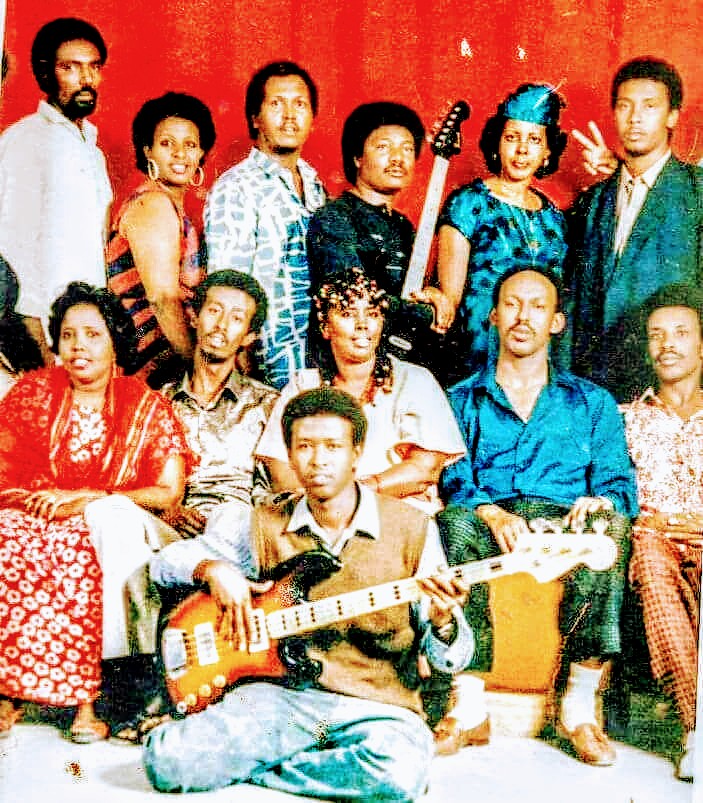
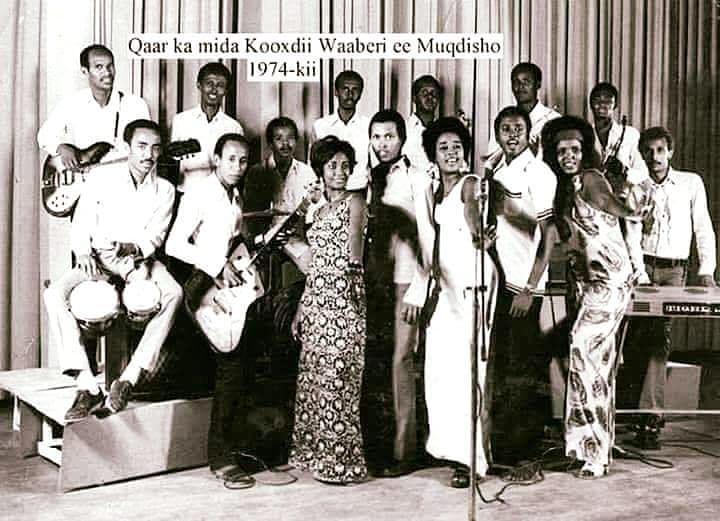
Waaberi, meaning “sunrise” in Somali, was a vibrant and flourishing group during the rise of the 1970s. In 1969, a coup d’état occurred when General Siad Barre sent Somali National Army officers to seize government official buildings in Mogadishu. In response to this, Waaberi became a government funded musical group that expressed sentiments under Barre through the lens of artistic expression. Waaberi quickly became a growing force that incorporated the mediums of dancing as well as vocal stylings. Their songs were centered around national pride as well as “Wadani” (meaning “patriotism” in Somali”) but also transitioned to describing the immense value of education as can be seen in the song “Waxbarta Aan Barwaaqo Gaarnee”.
Waaberi also gave rise to new participation of female members in musical and artistic dimensions. Khadra Daahir Cige was a dancer in Waaberi during this time and detailed her experiences in Christina Woolner’s research (author of Love Songs in Motion: Voicing Intimacy in Somaliland). Prominent singer, Maryam Mursal was also an integral part of Waaberi but after the band’s split up, was forced to walk for seven months in the Horn of Africa with her children in order to flee the Somali Civil War. In a time where women were not wearing head coverings and were encouraged to become a part of the expressive sphere, Waaberi offered up new opportunities which even entailed touring internationally and performing in the “World of Music, Arts and Dance” festival that took place in England in 1997.
Though Waaberi had to undergo its own mode of censorship due to the fact that it was government funded, Waaberi remains known for its fusion of Somali traditional folk songs, more modern music during the 1970s, and songs that demonstrated a social commentary on the happenings of the time. Unfortunately, many members either died or were exiled from Somali during the civil war and after the breakup of Waaberi. However, to this day, Waaberi is understood as groundbreaking in the sense that its musical unity impacted ideals, values, and the aesthetic Mogadishu of the 1970s.